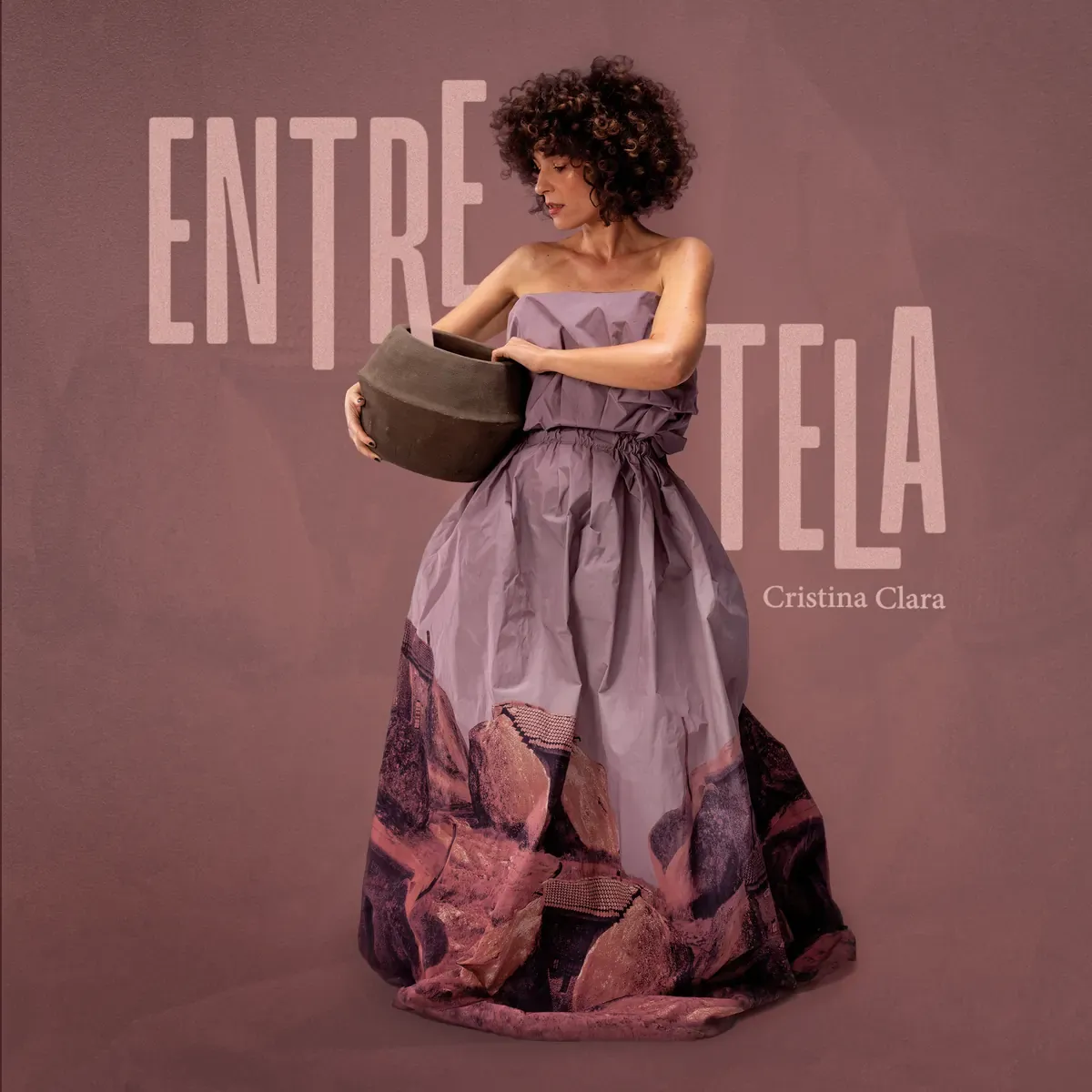
Cristina Clara
Entretela cover: Cristina Clara holding a clay pot, in a dress printed with rocks

New album · 2026

Entretela

Every song comes with its lining: a short text by Cristina, kept in the booklet beside the lyrics. Here you can read both.

  • António Zambujo
  • Tito Paris
  • Sérgio Godinho
  • Rolando Semedo
  • Roda de Percussão Ibérica
Pre-saveBuy

Lyrics and texts

01

Fado Rosa Maria

  • Lyrics: João Bastos
  • Music: António Melo
  • Origin: Song featured in the film “O Costa do Castelo”
  • Vocals: Cristina Clara
  • Mandolin: Edu Miranda
  • Portuguese guitar: José Manuel Neto
  • Classical guitar: Pedro Loch
  • Electric bass: Rolando Semedo
  • Drums and percussion: Joel Silva
  • Voice excerpts: Hermínia Silva (RTP Archive)

Lyrics

Assim à primeira vista Que eu sou fadista logo dirão Aqui não há só garganta Também se canta do coração Não ouso carpir o fado Triste e pesado como um lamento Mas cantá-lo com voz calma Do fundo d’alma com sentimento E é por isso que eu insisto E não desisto e hei-de cantar Sem viola, sem guitarra, Como a cigarra até rebentar Com este aspeto franzino Foi o destino que me marcou Esta será cantadeira Queira ou não queira e eu cá estou E tal qual como a Severa Ai quem me dera ser um portento Mas não sou baixa nem alta E não me falta descaramento.

At first glance They’ll soon say I’m a fado singer. Here, it isn’t only the throat — one sings from the heart as well. I dare not mourn the fado, sad and heavy as a lament, but sing it in a quiet voice, from the depths of the soul, with feeling. And that is why I insist, I do not give up, and I shall sing, without viola, without guitar, like the cicada until I burst. With this slight, frail look, it was destiny that marked me: “This one will be a singer, whether she likes it or not” — and here I am. And just like Severa — ah, if only I could be a wonder! But I am neither short nor tall, and I’ve no lack of cheek.

02

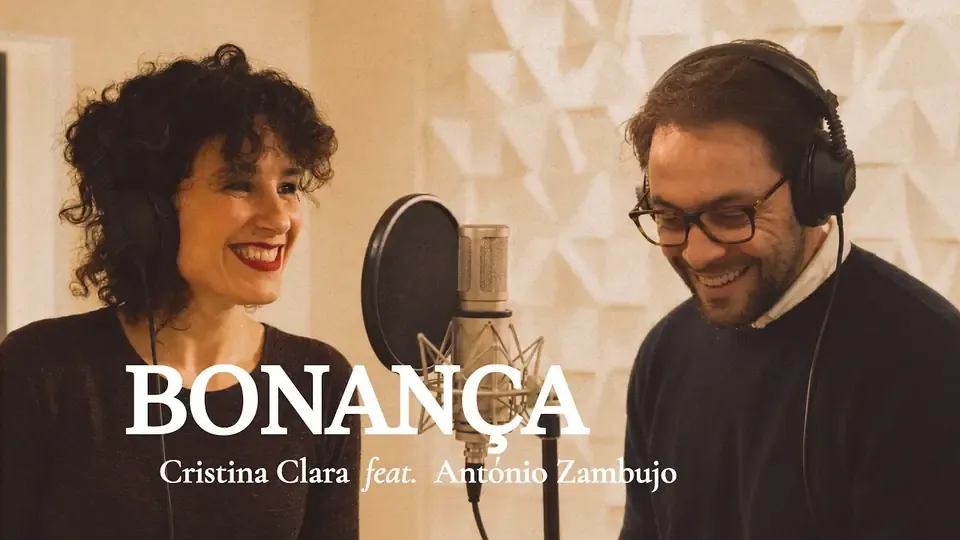
Bonança

feat. António Zambujo · Calm After the Storm

  • Lyrics: Cristina Clara
  • Music: Armandinho (Fado Alexandrino Antigo)
  • Vocals: Cristina Clara and António Zambujo (guest)
  • Mandolin and cavaquinho: Edu Miranda
  • Classical guitar: Pedro Loch
  • Electric bass: Rolando Semedo
  • Drums and percussion: Joel Silva

Lyrics

Amanhã quando acordar Não te encontrarei aqui Vou buscar e rebuscar Descrente do que não vi Vou espreitar atrás da porta E da cortina carmim Nas gavetas do que importa Nos banquinhos do jardim Constelações sentinelas Lá do Cruzeiro do Sul Acendam luzes e estrelas Acordem o céu de azul Vou então reverberar Avolumar o teu nome Vou soprá-lo até chegar Onde a saudade tem fome De tanto descer a rua E subir sem te encontrar Talvez o tempo dilua O que insisto em procurar Até que o peito desperto Pelo alvoroço da espera Solta a voz já sem aperto Já não mora cá quem era Da busca vã a alegria E da tormenta a esperança Do silêncio a poesia Da tempestade a bonança

Tomorrow when I wake, I will not find you here. I’ll search and search again, disbelieving what I did not see. I’ll peer behind the door and the crimson curtain, in the drawers of what matters, on the little garden benches. Sentinel constellations there by the Southern Cross, light your lamps and stars, wake the sky into blue. Then I will reverberate, swell the sound of your name; I will blow it until it reaches where longing goes hungry. After walking down the street and back up without finding you, perhaps time will dissolve what I insist on seeking. Until my chest, awakened by the commotion of waiting, releases its voice, no longer clenched: the one I was no longer lives here. From the futile search, joy; from torment, hope; from silence, poetry; from the storm, the calm. From the Storm, the Calm

From the Storm, the Calm

In 2020 I left my home in Benfica and moved to Porto. Partly because the voice on the other end of the phone sounded like home to me, and partly because Lisbon no longer seemed like it. This felt like a clean way out. A good job offer, less chaotic hours, and the North waiting for me. I arrived in Porto on a rainy night — the Invicta, the “Unvanquished City”, has the brutal frankness of its natives — and I refused to fool myself, even though it was August. It rained often. As the days passed, the streets emptied by the pandemic dystopia slowly filled with sunlight. Walking down Rua 31 de Janeiro to the Ribeira became a ritual. Have you ever seen the Ribeira deserted? I swear, it is a poem. Two years passed and I met people who made themselves at home in my days, never to leave again (I am sure). I learnt extraordinary things, such as cooking on an induction hob, playing tracanholas, or using Excel. I had time, I had myself, and a rescue mission under way. It rained a great deal, but whenever I stepped out onto the third-floor balcony of the building where I was the only resident for two years, I looked at the graffitied wall of the old erotic cinema and read: “after the storm comes the calm.” Here it is. Rain in Porto falls in a fine drizzle. It has open vowels upon the pavement. It wets window ledges and passing souls. The rain in Porto does not wait for winter; it climbs anxiously up the calendar, its skirt in hand… and boldly it falls, tiny, fine, right into my eyes.

Cristina Clara

03

Novo Credo

A New Faith

  • Lyrics: Edu Mundo
  • Music: Edu Mundo e Daniel Pereira Cristo
  • Vocals: Cristina Clara
  • Cavaquinho and Portuguese guitar: Edu Miranda
  • Classical guitar: Pedro Loch
  • Electric bass: Rolando Semedo
  • Drums and percussion: Joel Silva

Lyrics

Você não vê que os bombos que há agora, Os que na moda, são de nova geração? Esses são grandes e pesados, muito embora, Há que contar: não tem eletrificação! Repare que este pequenito aparelho Com este fio que se liga a combinar Explode bombas pelas ruas do concelho E essas bombas nem precisam de lá estar! E esse cheiro que lhe fica a meter medo? E se eu pudesse poupar-lhe o exercício? É que a medida do nosso novo credo Já nem enreda as mãos no sacrifício Poupe o esforço e o sangue ao tocador De acartar pneu até à igreja mãe Poupe o vinho e água pé ao morador Poupe a criança de querer tocar também Passando ao ponto fundamental da palestra Não há mais forma de evitar a evolução: Lá na cidade já ninguém pensa em orquestra Quanto mais bombos a revoltar-nos o chão! Reflita bem, que eu cá passo pra semana Antes que chuva nos encontre aqui aos tombos Que neste assunto só você é que se engana Na teimosia de tocar os velhos bombos!

Can’t you see that the drums they make these days, the fashionable ones, are a new generation? Those old ones are large and heavy, mind you — and one must admit: they aren’t electrified! Now look at this tiny little device, with this neat cable that plugs straight in: it sends booms exploding through the streets of town, and the drums themselves needn’t even be there! And that smell that keeps frightening you? And what if I could spare you all that exercise? By the measure of our new creed, hands need no longer tangle themselves in sacrifice. Spare the player the sweat and blood of hauling tyres all the way to the mother church. Spare the locals their wine and água-pé. Spare the child the wish to play as well. Moving on to the fundamental point of the lecture: there is no longer any way to avoid evolution. In the city no one even thinks of orchestras anymore, let alone drums making the ground revolt beneath our feet! Think it over — I’ll be back next week, before the rain catches us tumbling here. Because in this matter you alone are mistaken, in your stubbornness to play those old drums!

Day of Procession

I believe smell is the fastest vehicle back to places within myself whose existence I thought extinct. That day I returned home in a different way. I searched my memory for the smell of chalk and school notebooks, flower carpets and drums on procession day. I would stand at the very front of the crowd, millimetres from the big drums, my eyes shining. It was my act of faith on procession day… a kind of new creed added to the others: the belief that, by standing close to the vibrating drum skins, another life would also wake inside me. Translator’s note: água-pé is a traditional Portuguese light wine made from grape pomace.

Cristina Clara

04

Águas Santas

Holy Waters

  • Lyrics and music: Amélia Muge
  • Vocals: Cristina Clara
  • Documentary material: Excerpts from “Grande Reportagem Pesca”, kindly provided by Nha Terra Nha Cretcheu / RTP África

Lyrics

Águas Santas Quase prece Escorrendo sol adentro Onde o amor permanece Sol de um desejo de terra Que em onda se contém Que em solidez se consome Uma entrega sem ter nome Que é riqueza iluminando O outro lado da fome O outro lado da fome

Holy waters, almost a prayer, running into the sun where love remains. Sun born of a longing for land, held within a wave, spent in solidity. A surrender without a name, a wealth casting light on the other side of hunger, on the other side of hunger.

05

Bus Odjus

feat. Tito Paris · Your Eyes

  • Lyrics and music: Rolando Semedo
  • Vocals: Cristina Clara and Tito Paris (guest)
  • Mandolin: Edu Miranda
  • Cavaquinho: Dany Fonseca
  • Portuguese guitar: José Manuel Neto
  • Classical guitar: Pedro Loch
  • Electric bass: Rolando Semedo
  • Percussion: Joel Silva

Lyrics

Bus odjus ki sta spian ku txeu dimora N’ka sabi si é amor ou vaidade Fazem pensa na sorti i na sodadi Kuzé ki n’ta xinti se bu ka spian S’nha korpu ta fika xei di tremura Na toki di bu mô, di ternura Ta fazem xinti, um mar di imuson Nha kurason sen riason prendi lison, d’olhar d’amor Ó ki bu ta bai Favor leban ku bô Na retina bus odjus Na camara d’bu kurason Kurason chei d’razon Ó ki bu ta bai Favor leban ku bô Mi n’kre bai mora na Bu kurason, mi ku nha violon Bus odjus ki sta spian ku txeu dimora…

Your eyes, watching me, lingering so long — I don’t know whether it is love or vanity. They make me think of fate and longing. What would I feel if you were not looking? If my body fills with trembling at the tender touch of your hand, you make me feel a sea of emotion; my stunned heart learns the lesson of a loving gaze. Oh, when you go, please take me with you — your eyes held in my retina, in the camera of your heart, a heart full of reason. Oh, when you go, please take me with you. I want to go and live inside your heart, me and my guitar. Your eyes, watching me, lingering so long…

Translator's notes

  • English translation from Cape Verdean Creole.
06

Cravos de Papel

Paper Carnations

  • Lyrics: António de Sousa
  • Music: Alain Oulman
  • Vocals: Cristina Clara
  • Mandolin: Edu Miranda
  • Classical and electric guitar: Pedro Loch
  • Electric bass: Rolando Semedo
  • Drums and percussion: Joel Silva

Lyrics

Tenho sete namorados Na rua do lá vem um Sete facas apontadas Ao coração em jejum Meu compadre S. João Das fogueiras, das cantigas, Ficarei par ou par não Com as outras raparigas Nao julgue lá que me enjeita Assim com duas razões O meu demónio aproveita As melhores ocasiões O meu demónio aproveita As melhores ocasiões Meninas vossos amores São como a água corrente Na margem prados e flores Ao meio afoga-se a gente Amorzinho lua nova Rica fruta do pomar Quem será que tira a prova Do vinho do teu lagar Tenho sete namorados Na rua do lá vem um Sete facas apontadas Ao coração em jejum Tenho sete namorados Na rua do lá vem um Tenho sete namorados Na rua do lá vem um Sete facas apontadas Ao coração em jejum Sete e sete são quatorze Com mais sete vinte e um Tenho sete namorados E não gosto de nenhum!

I have seven sweethearts — down the street, here comes one. Seven knives are pointed at a fasting heart. My old friend Saint John, of bonfires and songs, shall I end up paired or not, like the other girls? Don’t think you can cast me off with just a reason or two. My devil knows how to seize the finest opportunities. My devil knows how to seize the finest opportunities. Girls, your lovers are like running water: meadows and flowers by the bank, but in the middle, people drown. My darling, new moon, rich fruit of the orchard — who will be the one to taste the wine from your press? I have seven sweethearts — down the street, here comes one. Seven knives are pointed at a fasting heart. I have seven sweethearts — down the street, here comes one. I have seven sweethearts — down the street, here comes one. Seven knives are pointed at a fasting heart. Seven and seven make fourteen, add seven and you get twenty-one. I have seven sweethearts, and I don’t like a single one!

07

Entretela

Interfacing

  • Text and voice: Cristina Clara

A última vez que a vi estava vestida cor de rosa chá. Não me lembro bem da cor do sofá mas lembro-me da textura aveludada. Divertia-me a passar-lhe a mão numa e noutra direção para ir mudando de cor. Foi ela que me deixou esta saia. Ela nunca usava calças. Dizia que as saias eram uma espécie de canivete suíço para as mulheres. Cobriam e descobriam com a mesma facilidade, enchiam os salões de nenúfares coloridos nos bailes e guardavam segredos de estado nos forros de entretela. — Esta saia é tua e será depois da mulher a quem contares a tua história. É uma espécie de amuleto que te deixo. Esta saia é uma oração.

Cristina Clara

The last time I saw her she was dressed in tea-rose pink. I do not quite remember the colour of the sofa, but I remember its velvety texture. I amused myself by stroking it one way and then the other, watching its colour change. She was the one who left me this skirt. She never wore trousers. She used to say skirts were a kind of Swiss Army knife for women. They covered and uncovered with equal ease, filled ballrooms with colourful water lilies at dances, and kept state secrets hidden in their interfaced linings. “This skirt is yours, and afterwards it will belong to the woman to whom you tell your story. It is a kind of amulet I leave you. This skirt is a prayer.”

Cristina Clara

08

A minha Saia

My Skirt

  • Lyrics: Ana Sofia Paiva
  • Music: Jaime Santos (Fado Sevilha)
  • Vocals: Cristina Clara
  • Mandolin: Edu Miranda
  • Portuguese guitar: José Manuel Neto
  • Fado guitar: João Filipe
  • Double bass: Carlos Menezes

Lyrics

A minha saia tem folhos É negra como a magia Não lhe deites muito os olhos Não é alecrim aos molhos São pecados de alquimia A minha saia tem manha É uma raposa escarlate Tem cuidado que ela estranha Se desconfiar arranha Pode até ser que te mate A minha saia é sublime Bordei-a eu a meu gosto E se vesti-la for crime Meu corpo não se redime Só pra te dar o desgosto Vou sair com a minha saia Que ninguém me faça frente Seja de chita ou cambraia Não tenho medo que caia Na boca de toda a gente Vou sair sem fé em nada Não tenho religião Comprida curta ou rodada Esta saia é uma espada Esta saia é uma oração.

My skirt has ruffles; it is black as magic. Do not cast too many eyes upon it — it is no rosemary by the bunch, but sins of alchemy. My skirt is sly; it is a scarlet fox. Take care — it can take offence. If it grows suspicious, it scratches; it may even kill you. My skirt is sublime. I embroidered it to my own taste, and if wearing it is a crime, my body will not redeem itself just to give you the satisfaction. I’m going out in my skirt; let no one stand in my way. Whether calico or cambric, I’m not afraid if it ends up on everybody’s lips. I’ll go out with faith in nothing; I have no religion. Long, short or swirling, this skirt is a sword, this skirt is a prayer.

09

A História do nosso Amor

Our Love Story

  • Lyrics: Cristina Clara
  • Music: Carlos da Maia (Fado Perseguição)
  • Vocals: Cristina Clara
  • Mandolin: Edu Miranda
  • Portuguese guitar: José Manuel Neto
  • Fado guitar: João Filipe
  • Double bass: Francisco Brito

Lyrics

Eu quis um dia contar Eu quis outrora cantar A história do nosso amor Busquei álbuns de memórias Mas foram buscas inglórias Não encontrei nem vapor Nem poeira dos abraços Nem pegadas dos teus passos Ou brilho dos olhos teus Só o retrato do tempo O eco agudo do vento Numa gaveta de adeus Quis chorar, não consegui Quis sair mas insisti Quis inventar um sinal Desse espanto que eu vivi Desse amor que persegui E se esfumava afinal Nem poeira dos abraços Nem pegadas dos teus passos Ou brilho dos olhos teus Mas a voz que conta a história Há-de acender outras glórias E há-de cantar este adeus

One day I wanted to tell, once I wanted to sing, the story of our love. I searched through albums of memories, but all those searches came to nothing; I found not even a wisp. Not the dust of embraces, nor the footprints of your steps, nor the shine in your eyes — only time’s portrait, the sharp echo of the wind in a drawer of goodbyes. I wanted to cry; I could not. I wanted to leave, but I stayed. I wanted to invent a sign of that wonder I had lived, of that love I had pursued and that, in the end, dissolved into smoke. Not the dust of embraces, nor the footprints of your steps, nor the shine in your eyes. But the voice that tells the story shall kindle other glories and shall sing this farewell.

A Story of Ending

I was there on Christmas Day. I could have sworn I could still smell lunch, freshly cooked. I wanted to take advantage of your long absence to leave you a note. I raised my eyes to the kitchen counter and then to the huge window overlooking the planes: they tore across the orange sky, almost on a collision course with the rooftops of the same colour. An A330! I opened the first drawer to look for a pen and a piece of paper. It was empty. An A380!! I had never seen one of those…

Cristina Clara

10

Primeru Bes

feat. Rolando Semedo · First Time

  • Lyrics and music: Rolando Semedo
  • Vocals: Cristina Clara and Rolando Semedo (guest)
  • Mandolin and cavaquinho: Edu Miranda
  • Guitars: Pedro Loch and Rolando Semedo
  • Electric bass: Rolando Semedo
  • Drums and percussion: Ndu Carlos and Joel Silva
  • Tracanholas: Cristina Clara

Lyrics

Primeru bês, ki nôs odju kontra N’bira geladu, paradu, trankadu Ku lingua pisadu, só ku gana flau Korpu rapian, dan gana papia Má dan kudadu, n’fika kaladu Pamodi gô dja txiga hora Di ábri nha konbersu ku bô Pan flabu ma mi n’krebu txeu Txeu sima petu xeia xeila lua Djan krebu txeu, sen midida Ku tudu força di kretcheu Sugundu bês, foi la n’igreja Ki n’proveta, paz di cristo Pan xinti bu mô Bu n’fanhin rostu, bu tra nha mô Bu tra nha riba di bô N’kre purguntau Undi ki bu staba Ki nunka n’odjau Modi ki bu txoma Undi é bu morada É la ki n’kre sta

The first time our eyes met, I froze — still, locked in place, my tongue heavy, wanting only to speak to you. My body shivered; I wanted to talk, but fear took hold of me, and I stayed silent. Because now the time has come to open my conversation with you, to tell you how much I love you — so much, like a chest filled with a full moon. I love you beyond measure, with all the strength of kretcheu. The second time was there in church. I took my chance at the sign of peace so I could feel your hand. You frowned and pulled my hand away, pulled it back from you. I want to ask you: where had you been that I had never seen you? What is your name? Where do you live? That is where I want to be.

Translator's notes

  • English translation from Cape Verdean Creole.
  • Translator’s note: kretcheu is a Cape Verdean Creole word for a deeply loved person — literally rooted in “to want/love very much”.

With which seas do I stitch myself together?

Can a voice have borders?

Cristina Clara

11

Intermitentemente

feat. Sérgio Godinho · Intermittently

  • Lyrics and music: Sérgio Godinho
  • Vocals: Cristina Clara and Sérgio Godinho (guest)
  • Mandolin: Edu Miranda
  • Flute: Barbara Piperno
  • Classical guitar: Pedro Loch
  • Electric bass: Rolando Semedo
  • Drums and percussion: Joel Silva

Lyrics

Comigo podes Ser tu mesma e na mesma Ser diferente em mim de tudo Ou, ou nada quase Contigo dá-se uma coisa muito simples Que é da simples liberdade Que é, é tudo quase Já nem falando do amor à primeira vista Vista entre portas tão pesadas Intermitentemente ter-te em mim Intermitentemente ter-te Abrir as salas que não tinha Nem tu tinhas por fechadas Foste ao armário dos projetos Escolher entre fogos e artifícios O que dura quase Deste faísca à trovoada Por silêncio, por chuvinha entrecortada Tão distante quase Já nem falando do amor à primeira vista Vista entre portas e vidraças Intermitentemente ter-te em mim Intermitentemente ter-me Deixar-me aqui donde tu largas E me entregas e me abraças Abandonado à minha sorte Sorte minha fui ter à tua casa Que é morada quase Aproximou-se o firmamento E geocêntricos olhamos para o sol De frente, um instante quase Já nem falando do amor à primeira vista Visto através dos compromissos Intermitentemente ver-me em ti Intermitentemente ver-me Todo o passado em dois espelhos Que de mágoas são omissos Vieste ao resto do meu sono Entregar a consciência a um moribundo Que é já nada quase Sinais da vida recupero Em tocando o movimento dos teus lábios Que é dormente quase Já nem falando do amor à primeira vista Visto do vão da escadaria Intermitentemente ter-te em mim Intermitentemente ter-te No patamar da luz quebrada Que nos serve de vigia

With me you can be yourself and, at the same time, be different in me from everything — or, or almost nothing. With you something very simple happens, something born of simple freedom, which is, is almost everything. Not even speaking of love at first sight, glimpsed between such heavy doors — intermittently having you in me, intermittently having you, opening rooms I did not have, nor did you think them closed. You went to the cupboard of projects to choose, between fires and artifices, whatever almost lasts. You gave the thunderstorm its spark through silence, through broken drizzle, so almost distant. Not even speaking of love at first sight, seen between doors and windowpanes — intermittently having you in me, intermittently having me, leaving me here where you let go, where you surrender me and hold me. Abandoned to my fate — by good fortune I came to your house, which is almost a home. The firmament drew closer, and geocentric, we looked at the sun straight on, for almost an instant. Not even speaking of love at first sight, seen through commitments — intermittently seeing myself in you, intermittently seeing myself, all the past in two mirrors that leave every sorrow out. You came to what remained of my sleep to hand consciousness to a dying man who is almost nothing now. I recover signs of life as I touch the movement of your lips, which is almost asleep. Not even speaking of love at first sight, seen from the stairwell — intermittently having you in me, intermittently having you, on the landing of broken light that keeps watch over us.

Intimacies

At home, we always ate at different times. It was far too comfortable for intimacy to share the same space, schedule and menu. We were afraid it might put down roots and never leave. And then, what would we do with it?

Cristina Clara

12

Ter o Tejo por rival

Having the Tagus as a Rival

  • Lyrics: Maria do Rosário Pedreira
  • Music: Cristina Clara e Pedro Loch
  • Vocals: Cristina Clara
  • Mandolin: Edu Miranda
  • Portuguese guitar: José Manuel Neto
  • Classical guitar: Pedro Loch
  • Electric bass: Rolando Semedo
  • Drums and percussion: Joel Silva

Lyrics

Quando o sol acorda Alfama E o tempo está de feição, Meu amor foge da cama Levando a cana na mão. Se o Tejo for seu amigo, Vai ser boa a pescaria. E eu fico aqui de castigo, Amuada todo o dia. Ter o Tejo por rival Não é normal Nem numa canção. Ter o Tejo por vizinho Vai deixar sozinho O meu coração. Pode haver quem se acostume, Mas eu, ao ciúme, Não o sei matar. Alfama, diz lá ao meu amor Que pense melhor Antes de ir pescar. Quando em Alfama anoitece, Sonhando ser perdoado, Meu amor reaparece Com o balde bem carregado. Mas eu cá não mordo o isco, Ele vai ter de aprender: Se vinha só pelo petisco, Que pescasse outra mulher. Ter o Tejo por rival Não é normal Nem numa canção. Ter o Tejo por vizinho Vai deixar sozinho O meu coração. Pode haver quem se acostume, Mas eu, ao ciúme, Não o sei matar. Alfama, diz lá ao meu amor Que pense melhor Antes de ir pescar. E manda o Tejo prá cama, Que saia de Alfama E se atire ao mar.

When the sun wakes Alfama and the weather is just right, my love slips out of bed with his fishing rod in hand. If the Tagus is his friend, the fishing will be good, and I stay here as punishment, sulking all day. Having the Tagus as a rival is not normal, not even in a song. Having the Tagus as a neighbour will leave my heart alone. There may be those who get used to it, but jealousy — I do not know how to kill it. Alfama, tell my love to think twice before he goes fishing. When night falls over Alfama, dreaming he will be forgiven, my love reappears with his bucket well loaded. But I am not biting the bait; he will have to learn: if he came only for the snack, he should have fished for another woman. Having the Tagus as a rival is not normal, not even in a song. Having the Tagus as a neighbour will leave my heart alone. There may be those who get used to it, but jealousy — I do not know how to kill it. Alfama, tell my love to think twice before he goes fishing. And send the Tagus off to bed — out of Alfama and into the sea.

13

Lilaré dos 5 Sentidos

feat. Roda de Percussão Ibérica · Lilaré of the Five Senses

  • Origin: Cancioneiro popular português — Moimenta, Vinhais
  • Vocals: Cristina Clara and Roda de Percussão Ibérica
  • Special guest: Roda de Percussão Ibérica
  • Arrangement: Roda de Percussão Ibérica
  • Musical direction of the arrangement: Rui Aires

Lyrics

O primeiro que é ver A coisa que eu mais desejo Quando passo pela rua Sempre julgo que te vejo Lilaré, Lilaré, Lilaré, Lilaró O segundo que é ouvir Eu de si não ouço nada Quando ouço mal de si Fica-me a cor demudada Lilaré, Lilaré, Lilaré, Lilaró O terceiro que é cheirar Um raminho d'alecrim Peço-te amor da minh’alma Que não te esqueças de mim Lilaré, Lilaré, Lilaré, Lilaró O quarto que é gostar, Eu de ti sempre gostei Desde que nasci até agora Sempre por ti aguardei Lilaré, Lilaré, Lilaré, Lilaró O quinto que é apalpar Menina os seus anseios Desejava de saber Porque são tais arreceios Lilaré, Lilaré, Lilaré, Lilaró

The first is sight — the thing I desire most. Whenever I walk down the street, I always think I see you. Lilaré, Lilaré, Lilaré, Lilaró The second is hearing. I hear nothing from you; when I hear ill spoken of you, all colour drains from my face. Lilaré, Lilaré, Lilaré, Lilaró The third is smell — a little sprig of rosemary. I ask you, love of my soul, do not forget me. Lilaré, Lilaré, Lilaré, Lilaró The fourth is taste: I have always had a taste for you. From the day I was born until now, I have always waited for you. Lilaré, Lilaré, Lilaré, Lilaró The fifth is touch — my girl, your longings. I wished to know why such misgivings. Lilaré, Lilaré, Lilaré, Lilaró

14

Aponta se Puderes

Write It Down, If You May

  • Text and voice: Cristina Clara

Se um dia não puder pedir-te Como hoje te pedia, Se me falhar a voz, ou o tino, ou a vontade, Se o meu corpo não souber Dar pistas do desejo… Não te esqueças nunca Aponta, se puderes Mesmo que eu me ausente, Mesmo que os meus olhos se esvaziem, Que eu não pareça sequer viver, Não te esqueças Aponta, se puderes Toca-me, penteia-me com os dedos os cabelos, Desenha as minhas pálpebras com o teu indicador... Ou deixa pousada a tua mão Onde eu a possa sentir. E se não te lembrares do roteiro: Fica apenas. Não te esqueças, não? Aponta, se puderes

Cristina Clara

If one day I cannot ask you as I would ask you today, if my voice fails me, or my reason, or my will, if my body no longer knows how to give clues to desire… Never forget. Write it down, if you can. Even if I am absent, even if my eyes empty, if I do not even seem alive, Do not forget. Write it down, if you can. Touch me, comb my hair with your fingers, trace my eyelids with your index finger… or simply rest your hand where I can feel it. And if you cannot remember the route: just stay. Do not forget, will you? Write it down, if you can.

Cristina Clara

15

Farol de Montedor

Montedor Lighthouse

  • Origin: Cancioneiro popular português — Viana do Castelo
  • Vocals: Cristina Clara
  • Classical guitar: Pedro Loch
  • Sound design: Joel Silva
  • Thank you, Mariana Correia and Rui Aires, for the window you opened onto this song.

Lyrics

Oh farol de Montedor, ó ai ó ai Oh farol de Montedor Alumia cá p’ra baixo, ó ai ó ai Alumia cá p’ra baixo, ó ai ó ai Qu’eu perdi o meu Amor, ó ai ó ai Qu’eu perdi o meu Amor E às escuras não o acho, ó ai ó ai E às escuras não o acho, ó ai ó ai É noite e o sol já está posto, ó ai ó ai É noite e o sol já está posto E o meu Amor que não vem, ó ai ó ai E o meu Amor que não vem, ó ai ó ai Ou o mataram a ele, ó ai ó ai Ou o mataram a ele Ou ele matou alguém, ó ai ó ai Ou ele matou alguém, ó ai ó ai Oh farol de Montedor, ó ai ó ai Oh farol de Montedor Iça a bandeira de luz, ó ai ó ai Iça a bandeira de luz, ó ai ó ai Foi-se embora o meu amor, ó ai ó ai Foi-se embora o meu amor Tenho penas choro muito, ó ai ó ai Tenho penas choro muito, ó ai ó ai

Oh, Montedor Lighthouse, oh ai oh ai, Oh, Montedor Lighthouse, shine down this way, oh ai oh ai, shine down this way, oh ai oh ai. For I have lost my love, oh ai oh ai, for I have lost my love, and in the dark I cannot find him, oh ai oh ai, and in the dark I cannot find him, oh ai oh ai. It is night and the sun has set, oh ai oh ai, it is night and the sun has set, and my love has not come, oh ai oh ai, and my love has not come, oh ai oh ai. Either they killed him, oh ai oh ai, either they killed him, or he has killed someone, oh ai oh ai, or he has killed someone, oh ai oh ai. Oh, Montedor Lighthouse, oh ai oh ai, Oh, Montedor Lighthouse, hoist your flag of light, oh ai oh ai, hoist your flag of light, oh ai oh ai. My love has gone away, oh ai oh ai, my love has gone away. I am full of sorrow, I cry so much, oh ai oh ai, I am full of sorrow, I cry so much, oh ai oh ai.

Videos from the album

2026

2026

Leaf through the booklet

Design by Martina Hotzel, photography by Ana Viotti.

Pages 3-4
Pages 5-6
Pages 7-8
Pages 9-10
Pages 11-12
Pages 13-14
Pages 15-16
Pages 17-18
Pages 19-20
Pages 21-22
Pages 23-24

Credits

Artistic direction
Cristina Clara
Music production
Cristina Clara, Edu Miranda, Joel Silva
Executive production
Espelho de Cultura
Recording
João Pedreira, Nelson Carvalho, Nuno Simões
Mixing and mastering
Fernando Nunes
Digital distribution
Galileo Music
Photography
Ana Viotti
Make-up
Francisca Bairros
Costume design
Lidija Kolovrat
Design
Martina Hotzel

Musicians

Flute
Barbara Piperno
Double bass
Carlos Menezes, Francisco Brito
Cavaquinho
Dany Fonseca
Mandolin, cavaquinho and Portuguese guitar
Edu Miranda
Fado guitar
João Filipe
Drums and percussion
Joel Silva, Ndu Carlos
Portuguese guitar
José Manuel Neto
Classical and electric guitar
Pedro Loch
Electric bass
Rolando Semedo

Thanks

Afonso Pinto, Alba Ruiz, Ana Margarida Andrade, Companhia das Soluções, Diana Henriques, Diana Martinez, Diana Valente Perfeito, Égide Artes, Enrico Casetta, Graça Rodrigues, Joana Garcia, João André, Jordi Torrents, Lidija Kolovrat, Lost In India, Madalena Raimundo, Margarida Soares, Margaux Belanger, Mariana Camacho, Mariana Correia, Miguel Quitério, Pedro Loch, Rui Aires, Uma Volta em Lisboa, Vivaplant.

Physical album

Order

Select the album and the number of copies you would like to receive by post.

The reply goes to this address.

Shipping address

Your details are used only to handle the order.